Sea trout fishing in Sweden
Sea trout are brown trout (Salmo trutta) that migrate to the sea to grow and return to their home river to spawn. Along Sweden's coasts they are fished all year, but autumn and spring are the classic seasons. Bright silver fish, hard fights and the chance to fish from shore without a boat make sea trout one of the country's most sought-after sport fish.

Havsöringen är öringens havslevande form. Eftertraktad sportfisk som fångas längs våra kuster vår och höst.
Fishing tips & gear
- Coastal lures (Salty 12–18 g, Spöket 18 g, Magnus 18 g, Hansen Flash, Westin Salty)
- Slim spinners 10–18 g
- Snurrebassen / Falkfish Hooker
- Surf jigs in natural colors
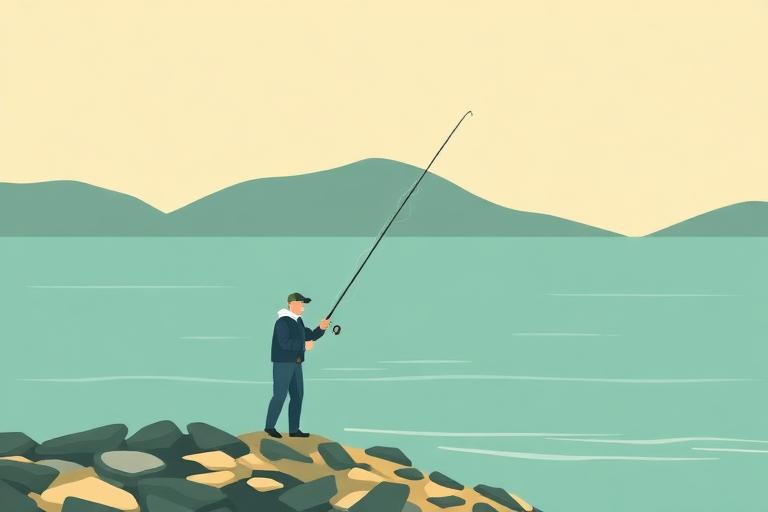
Coastal sea trout fishing. Look for windy days with onshore chop. Classic coasts: the southern Scanian coast, Halland coast, Bohuslän coast, Bornholm. Wading in chest waders opens up better casting angles.
Most common methods

Where to fish for sea trout
Sea trout are found along the entire Swedish coast, from the Bothnian Bay to the West Coast. Popular areas include the coasts of Skåne and Blekinge, Gotland, Öland, the Stockholm and Östergötland archipelagos, and the Halland and Bohuslän coasts.
Look for varied bottom: bladderwrack, stones and sandy patches at 1–4 metres depth, ideally near a point, reef or river mouth. The fish hunt sand eels, sprat, prawns and amphipods in shallow water, especially when it is cold.
Season – why autumn is best
When the water cools below 12°C in September–November, sea trout move into shallower water and feed intensively. At the same time mature fish head for river mouths, where special closed zones often apply in autumn.
Late winter and early spring (February–April) is the next peak, when bright, well-fed fish cruise along the shoreline. In summer the fish go deeper and fishing is best at dusk and dawn.
Methods and lures
Coastal spinning with slim coastal wobblers and spoons of 10–25 grams is the most common method. Cast far and cover a lot of water – walk the shoreline rather than standing still.
Fly fishing with a 6–7 weight and prawn, ragworm or baitfish imitations is very effective in shallow water and calm weather. Waders and polarised glasses help you see and reach the fish.
Rules and minimum sizes
Minimum sizes and closed seasons differ between counties and coastal stretches, and many river mouths are closed in autumn and winter. Bright fish may usually be kept, while coloured spawning fish (brown, dark) must be released.
Always check current rules with the county administrative board or in FishMap's rules map before you fish. Coastal handline fishing is free in most of Sweden, but not everywhere.
Frequently asked questions
When is the season for havsöring?
The peak season for havsöring in Sweden is March-May, September-November.
How big does havsöring get?
Havsöring can grow up to 8.0 kg.
What's the best method to catch havsöring?
Common methods for havsöring are Fly fishing, Spinning.
Which techniques work for havsöring?
Spinning and Fly fishing — see the full guide for the right gear, baits and season.
Which bait works best for havsöring?
Proven baits: Coastal lures (Salty 12–18 g, Spöket 18 g, Magnus 18 g, Hansen Flash, Westin Salty), Slim spinners 10–18 g, Snurrebassen / Falkfish Hooker.
When is the best time to fish for sea trout?
Autumn (September–November) and late winter/spring (February–April), when the water is colder than about 12°C and fish hold in shallow water along the shore.
Do I need a fishing licence for sea trout?
Handline fishing along the coast is free in most of Sweden. Some areas and rivers require a fishing licence (fiskekort), and closed zones at river mouths often apply in autumn.
What is the best lure for sea trout?
Slim coastal wobblers and spoons of 10–25 grams in silver, copper or green/silver are classic choices. Match the weight to wind and depth.
Have you caught Havsöring?
Log the catch, compare with other anglers and climb the leaderboard.
Log catch