Zander fishing in Sweden
Zander (Sander lucioperca) is the predator Swedish anglers travel for — hard to catch, fast-growing and one of the finest table fish in the country. Related to perch but growing far larger, with a pointed snout, glassy eyes and two separate dorsal fins.
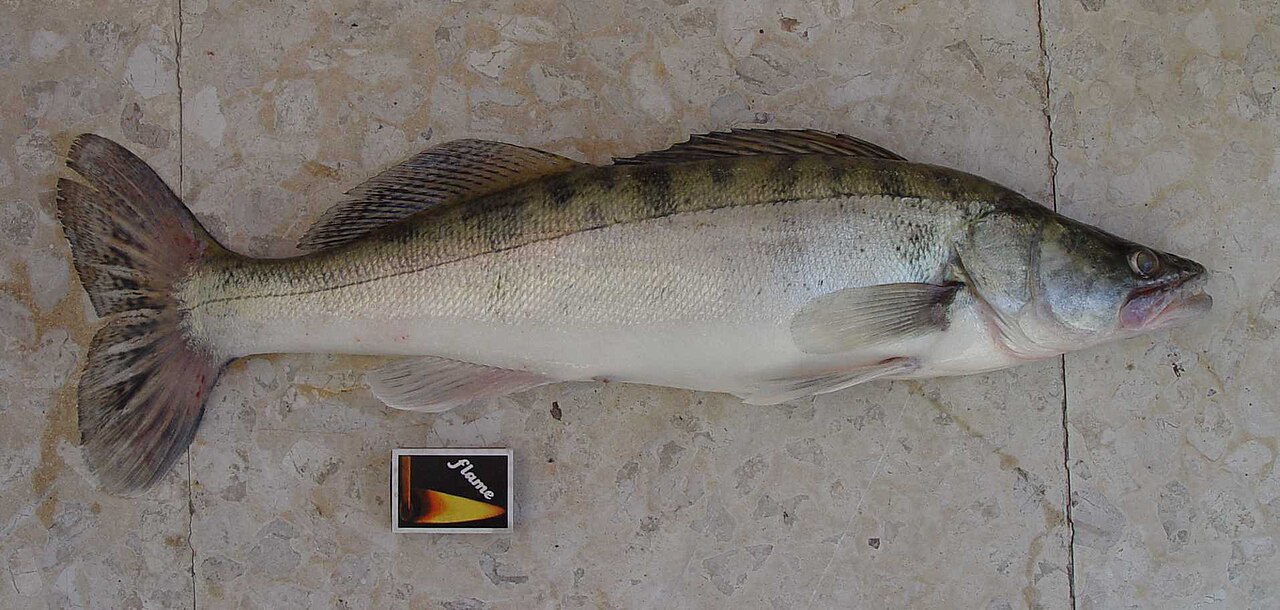
Gösen är en skygg och eftertraktad rovfisk. Aktiv främst i skymning och nattetid, gärna i djupa sjöar med bra siktdjup.
Source: SLU Artdatabanken
Fishing tips & gear
- Soft-plastic shads 10–15 cm in natural colors (Westin Shad Teez, Berkley PowerBait Pulse Shad, Keitech Easy Shiner, Savage Gear Cannibal)
- Slim paddle tails / pintails (Lunker City Slug-Go, Bait Breath U30)
- Dark colors at night, bright/silver in daytime on cloudy water
Zander have light-sensitive eyes — work drop-offs and edges 3–8 m deep around dusk. Use a sensitive rod tip: the take is often just a light 'tick'. Slow drags along bottom. Trolling with planer boards works well on big lakes.
Most common methods
Where to find zander
Zander are most common in nutrient-rich lowland lakes in southern and central Sweden. The best-known zander waters are Mälaren, Hjälmaren, Vänern, Vättern, Roxen, Åsunden and Ivösjön. They favour coloured water over hard bottoms at depths beyond 4 metres.
Season
Zander fishing is at its best from July to October when the fish hunt actively along deep edges. Night fishing in summer is particularly effective — zander see far better than their prey in darkness and low light.
A closed season applies in Mälaren and Hjälmaren, typically 1 April–15 June. Check the county administrative board for local rules.
Methods and lures
Vertical fishing with a 10–15 cm soft plastic on a 15–30 g jig head along deep edges is the single most productive method. Use a 0.35 mm fluorocarbon leader — zander are wary of braid visible in the water.
Trolling deep-diving crankbaits along the 5–10 m contour works well in the big lakes. Live roach under a float is the classic summer-night method.
Tackle and rigs for zander
Vertical fishing calls for a short, stiff rod of 6–7 feet with a fast action rated 20–60 grams. A baitcaster or 3000 size spinning reel with 0.13–0.17 mm braid keeps you in direct contact down to 15 metres — a zander take often feels like nothing more than the lure getting heavier.
Use a fluorocarbon leader of 0.30–0.40 mm, one to one and a half metres long. Jig heads of 15–30 grams with strong, extremely sharp hooks are essential: a zander's jaw is bony and blunt hooks simply never penetrate.
A sonar makes an enormous difference. Look for drop-offs, hard bottom and edges holding baitfish, and present the lure at the edge of the shoal rather than in the middle of it.
Rules, size limits and closed seasons
Most Swedish zander waters have a minimum size, commonly in the 40–45 cm range, and several large lakes also close for the spring spawning period. The limits differ between lakes and are revised from time to time.
Always check the county administrative board's regulations for the water plus the conditions on your fishing permit before keeping a zander. Managed lakes often add a daily bag limit as well.
Zander is first-class table fish, but the largest females are the most valuable fish in the stock. Keep fish around the minimum size and release the big ones.
Lakes where gös has been recorded
Based on species observation data for Swedish waters. Open a lake for weather, fishing times and local rules.
- Gös in OrlångenStockholm
- Gös in ÖrenSmåland (Jönköping)
- Gös in MälarenSvealand
- Gös in HjälmarenSvealand
- Gös in Åsunden (Östergötland)Östergötland
- Gös in LetälvenNärke
- Gös in Fladen
- Gös in LaganGötaland
- Gös in HelgasjönKronoberg
- Gös in MörrumsånGötaland
- Gös in YmsenVästra Götaland
- Gös in Motala strömÖstergötland
Fishing guides for gös
Frequently asked questions
When is the season for gös?
The peak season for gös in Sweden is June-September.
How big does gös get?
Gös can grow up to 12.0 kg.
What's the best method to catch gös?
Common methods for gös are Spinning, Trolling, Bait fishing.
Which techniques work for gös?
Vertical jig, Trolling, Spinning and Ice fishing — see the full guide for the right gear, baits and season.
Which bait works best for gös?
Proven baits: Soft-plastic shads 10–15 cm in natural colors (Westin Shad Teez, Berkley PowerBait Pulse Shad, Keitech Easy Shiner, Savage Gear Cannibal), Slim paddle tails / pintails (Lunker City Slug-Go, Bait Breath U30), Dark colors at night, bright/silver in daytime on cloudy water.
When is the best time to fish for zander?
Dusk, night and dawn from July to October. Zander have a reflective eye layer (tapetum lucidum) that gives them a decisive advantage in darkness and coloured water.
What lure works best for zander?
A 10–15 cm soft plastic in natural colours — white, motor oil, chartreuse — on a heavy jig head, fished vertically along deep edges. Second choice: a 12–15 cm deep-diving crankbait when trolling.
Do I need a wire trace for zander?
No. Zander lack the cutting teeth pike have and will not bite through ordinary line. Use a 0.30–0.40 mm fluorocarbon leader. If pike share the water, a short 15 cm wire trace is a sensible compromise.
How big do zander get?
The Swedish record is 12.58 kg, from Mälaren. Everyday fish run 1–3 kg, anything over 5 kg is a big zander, and a fish over 10 kg is a catch of a lifetime.